
Seduced By Restaurants
William Sitwell is poised to enter the restaurant fray himself

William Sitwell
William Sitwell is a British restaurant critic, writer, and broadcaster, known for his work in The Daily Telegraph and his role as a judge on MasterChefUK. He is also, as he reveals here, poised to enter the restaurant fray himself.
It was my Dick Rowe moment. It was 1999, and I was deputy editor of Waitrose Food Illustrated, a magazine I went on to edit, and worked on for almost two decades.
The food editor, Nikki, suggested we commission a column from a chef with a strange-sounding name. He was doing interesting things near the River Thames in Bray. He had a dish on the menu called Snail Porridge, another called Sounds of the Sea. “You hold a conch shell to your ear,” said Nikki, “and there’s a small audio device in it playing the sound of crashing waves and seagulls.” “Yeah, great, any other ideas?” I said. I am a food traditionalist and found the mutterings of something called “molecular gastronomy” tiresome.
A few days later, Heston Blumenthal gained a Michelin star for his restaurant The Fat Duck and, as Dick Rowe turned down the Beatles, so the chef who was named after a motorway service station was probably promptly signed up to write a column by Olive magazine, our closest rival at the time.
We were on the cusp of the Millennium, and people were excited at the idea of mawkish modernism, the theatre of the restaurant experience and, indeed, people queued around the virtual block for a table at The Fat Duck, so much so that in due course Heston bought the pub next door, The Hind’s Head, and one down the street, The Crown.
Bray, which already boasted Michel’s Roux’s three-star Waterside Inn, a much more traditional establishment, had become a culinary Mecca: not every gastronomic innovation played out in London. So we London-based food writers would have to get on a train to Maidenhead, then get a cab to Bray in order to hang out with Heston in his food laboratory.
There, armed with dragée pans (a sort of kitchen cement mixer), water baths, aerators and rotary evaporators, he would spherify, freeze-dry and revel in the concept of a low-temperature barbecue. But, to me, a meal at The Fat Duck was a form of expensive food tourism; back in London, I was happy to cling to more traditional forms of dining.
At Kensington Place, for example: chef Rowley Leigh’s magnificent hall of modern British food, steered by a firm adherence to classic French cookery and the influence of Elizabeth David. The Roux-trained Leigh’s classics included foie gras with sweetcorn and chicken with goat’s cheese mousse.
The place had a vast glass wall at the top of Kensington Church Street and, until Leigh left in 2006, it was a hub for media types and businesspeople shouting to be heard in a vast, Julyan Wickham-designed room. It was a concept on a collision course with a new age of dining, of smaller establishments, of sharing plates.
But the advance of the food of the Middle East, as dished out for the middle classes by Yotam Ottolenghi, or the concept of luxury Chinese, as conceived by Alan Yau at Hakkasan, saw diners encouraged to share, to order a plethora of dishes, the dream sold being to delve deeper into food culture, the actuality being to extract considerably more from your pocket.
The following year, Rowley Leigh opened Le Café Anglais, a fabulously grand dining room in Bayswater and we were all comforted by his next great invention, parmesan custard with anchovy toast. But by then more intimate and casual places were all the rage, and the High Priest of this new style of dining was a man called Russell Norman.
I went to the opening of his first Polpo, on Beak Street in Soho, where – in a windowless basement beneath his little Venetian bàcaro – Russell handed out sips of prosecco in small tumblers.
It felt cool. It was, like Russell, determinedly cool. He listened to cool music: Nick Drake, for example. He was unshaven and floppy-haired. He liked to take the plaster off the walls of a restaurant and go back to bare brick; he hired staff based on their smile and preferably with no previous hospitality experience. One of his next restaurants, Spuntino, had a no-reservations policy.
Which, to me, was distinctly tiresome, but trends are like viruses and before you could dream of phoning to ask for a table for two, the Hart brothers cottoned on with their tapas concept, Barrafina. A deliberate homage to Barcelona’s Cal Pep, Barrafina quickly became a chain: it didn’t take reservations either, and the eventual reward for diners in the very long queue on Frith Street was a stool at the open kitchen bar.
My first taste of Barrafina was with Soho House founder Nick Jones. How would we get around the queueing malarky? No problem: his PA was dispatched, and we arrived just as she reached the head of the queue.
Soho was a hive of restaurant activity, but others had their centre of gravity further east. Shoreditch became trendy, not least because Dorset-born chef Mark Hix had opened Tramshed. He drew a crowd excited by his simple-but-appealing offer of a whole chicken on a vertical spike, in a room dominated by the Damien Hirst installation “Cock and Bull”: a cockerel and a Hereford cow preserved in a glass tank of formaldehyde.
Some of us schlepped to Shoreditch, but the fashionistas and the hedge funders stayed in Mayfair. Rag trade mogul-turned-restaurateur Richard Caring did his best to keep them happy, buying the nightclub Annabel’s and (doffing his cap to the Instagram crowd), opening Sexy Fish.
The pandemic was a terrible time for restaurants, of course, but we’re over that now. We’re returning to sanity. Well, some of us. I, meanwhile, have gone mad.
But Caring was canny enough to realise London wasn’t the only city where the cash was flashed. He opened branches of the Ivy across the UK and even, in 2023, opening a branch of Sexy Fish in Manchester.
As it has been my pleasure to discover over the past 25 years, some of the most exciting dining experiences in the UK are outside London. I’ve had the best Indian I can remember at Khai Khai in Newcastle; Scof in Manchester was one of the most exciting city openings in recent years; and one of the UK’s finest restaurants is a little place called Juliet in Stroud, Gloucestershire. Juliet does what I’ve always loved, with a menu that wanders around the Mediterranean: no experimentation, no fripperies, just properly sourced ingredients, great service and a fabulous wine list.
The pandemic was a terrible time for restaurants, of course, but we’re over that now. We’re returning to sanity. Well, some of us. I, meanwhile, have gone mad.
I’ve written about restaurants for a quarter of a century and watched how the business, currently battling several economic headwinds, mesmerises people, afflicting with them with the disease of restaurateur-itis. It’s a virus that grabs holds of you and convinces you that the best thing they could do with their life is to open a restaurant.
By the time you read this, I should be presiding over The White Hart in the West Somerset town of Wiveliscombe. And I have had plenty of advice, not all of it positive: dining at a new place in Folkestone called Pomus recently, the owner told me “Don’t open a restaurant unless you have to.”
As I’m slowing realising, it is not a choice: there are some things in life you just have to do. But there will be no dragée pans or water baths. This critic is a sucker for the simple things in food, as long as they’re done perfectly. I’ll continue my journey eating in, and writing about, restaurants, but now with a foot (or perhaps my whole body) in the quicksand of the hospitality business.
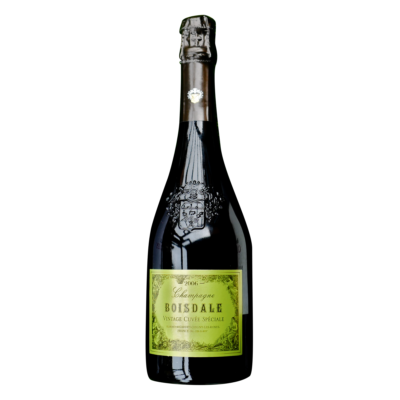
Comment for a chance to win a bottle of Vintage Champagne!
Send us a comment about this article, or ideas for future articles or interviews you would like to read. If we decide to publish any comments in future, you will win a bottle of Vintage Champagne.
Coming up at Boisdale
Discover what's going on across our famous venues
Membership
The Boisdale Club exists to generally encourage the enjoyment of life with a specific focus on delicious wine, Cuban cigars, Scottish malt whisky, live music and interaction between its members.
Please click apply now to find out more and sign up to the Boisdale Club.