How To Bluff At... Wine
Master the art of wine bluffing with clever tricks, insider tips and amusing shortcuts to drinking like a true connoisseur

Bill Knott
If you have ever stared blankly at a restaurant wine list, its gnomic words and phrases – reciotto, sur lie, vin de paille, qualitätswein mit prädikat – swimming before your eyes, taunting you with their impenetrability, or woken at three in the morning in a cold sweat from a nightmare in which the towering figure of a penguin-suited sommelier loomed menacingly above you while simultaneously dragging your finger to the extravagantly-priced upper echelons of his list, then this guide is for you.
Likewise, if you have ever been invited to a smart dinner party and agonised for days about what bottle to take for your host, or you have ever felt out of your depth at a wine tasting packed with expert swirlers and sniffers, or you simply want to know what to look for – and what to avoid – on the shelves of your local wine merchant, then Boisdale’s How to Bluff at Wine is all you need to take your rightful place among the grand cru of wine aficionados.
Know the lingo
Some wine terminology is deliberately opaque, invented by tweedy, portly wine merchants with faces as florid as their faded red trousers and a tendency to drone on about cassis and cigar boxes: “Ribena and pencil shavings don’t have quite the same cachet, old boy.”
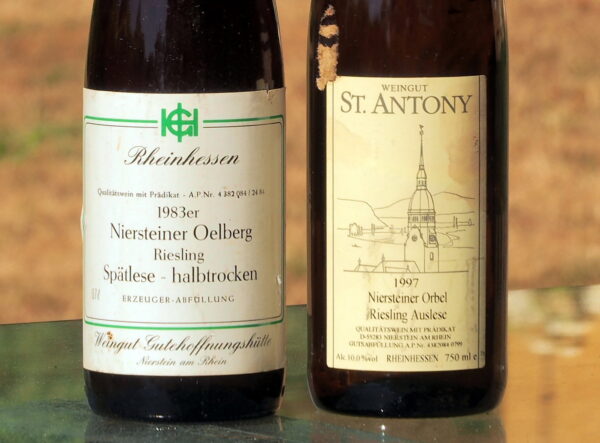
The key thing to remember is that wines can smell and taste of almost any fruit (or their blossoms): except, strangely, grapes. Unless it’s a Muscat. Be vague. “Stone fruits” usually works for white wines; “forest fruits” for reds. Similarly, try “faintly herbal” (for whites) or “hint of spice” (for reds). Burble on about carbonic maceration and tertiary aromas and you risk being labelled a bore, not a buff.
Don’t try to run before you can walk
There are two techniques that wine professionals have mastered – the swirl and the spit – and you should, on no account, try either in public without first practising them at home.
The Swirl
A convincing swirl is made easier by the wine buff’s insistence on only pouring enough wine into a glass to reach its widest point: 50ml, give or take. We are not swilling brim-full glasses of dodgy Pinot Grigio in a pub.
Practise swirling with the base of the glass grounded on a table; when you achieve the perfect swirling rhythm, lift it from the table and continue to swirl: angling the glass by about 30˚ from the vertical can be helpful here.
The Sniff and Sip
Sniffing should be performed silently and untheatrically. Hold the glass at eye level and inspect the wine (preferably against a white background), checking its clarity and colour with the intense, gimlet gaze of a De Beers jeweller. Swirl (see above) to activate the wines aroma molecules, then gently inhale the vapours that have gathered happily above the wine in your tulip-shaped glass. Now you are permitted to take a generous sip, letting the flavours of the wine sashay elegantly around your mouth, but do stop short of actually gargling with it.
Take mental notes (or actual notes, if you are feeling especially scholarly). But, if you are at a professional wine tasting, don’t swallow: you will be legless before you can say Trockenbeerenauslese. Which brings us to...
The Spit
Spitting is best practised with mouthwash in the privacy of your own bathroom. In public, don’t try it with a great mouthful. Aim your face downwards towards the spittoon, rather than trying to channel your inner Trevi fountain from halfway across the room.
Remember that swirlers, sniffers and spitters should be discreet. Nobody likes a show-off: you are tasting wine, not conducting the London Philharmonic.
At the Restaurant
Even if you are pushing the boat out, it is the sommelier’s job to know whether your resources stretch to a modest dinghy, or some vulgar billionaire’s superyacht. Be firm. Hover your finger over a couple of wines that are around the price point you want to pay, and brook no argument.
But do remember that the point of the sommelier offering you a small sample of your chosen wine is not for you to decide whether you like it. It is so that you can confirm that it’s what you ordered (the right wine, the right vintage); to make sure it is not faulty (if it smells like mouldy cardboard, it is corked); and to check that it is at the right temperature (ask to feel the bottle, or just cup your hand around the bowl of the glass).
There is no need to drink it: a glance at the label, a swirl and a sniff will suffice. It will also show the sommelier that you are one of The Cognoscenti, an important battle in the psychological war.
At the Wine Merchant
A knowledgeable and trusty helpmeet on your odyssey through the world of wine? Or a dodgy salesman desperate to offload a job lot of moribund rosé? Wine merchants can be either, or both. Here are some dos and don’ts:
Do
Taste before you buy, if you can. Most wine merchants hold weekly or monthly tastings, while some multiples (Majestic, for instance) always have a few bottles open to try.
Remember that – thanks to tax, duty, transport, bottling and sundry other costs – the actual cost of the wine in a £5 bottle is about 40 pence. In a £10 bottle, it is around £4, so you are getting (in theory) a 10-times better wine for only double the price.
Be wary of older vintages (three-year-old Provence-style rosé that is turning orange, for instance). The vast majority of wine is intended to be drunk when young, and wine merchants are as keen on shifting old stock as any other retailer. “Bin ends” are occasionally bargains, but by no means always. Caveat emptor.
If you are buying older wines, check a vintage chart. In Bordeaux, for example, a wine from a less-esteemed château in a good year will often be better (and better value) than the wine of a well-known château in a poor one. Don’t judge a claret by its cover.
Befriend your merchant. Wine merchants love talking about wine and adore giving advice. Do it diplomatically, but offer honest feedback. Tell them what you’re having for dinner. Ask what they drink at home. Hell, compliment them on their trousers.
Don’t
Don’t buy a whole case without tasting it first, however persuasive the merchant. Buy a bottle: if you don’t like it, it can go into the coq au vin; if you do, you can fill your boots (or your boot). Some merchants even wield a nifty Coravin, a contraption that allows them to offer tastes without pulling the cork.
Don’t buy half-bottles, except perhaps of dessert wine: they are notoriously uneven in quality, and age more quickly than full bottles. Better to buy bottles and use Vacuvin stoppers to preserve what remains. By contrast, magnums age very nicely and look great in the middle of a dinner table.
Don’t become too specific when tasting. Never guess the vintage, the grape, or the winemaker unless you’ve already sneaked a look at the label. Although claiming to have detected something daringly exotic can be fun: “I’m getting a distinct whiff of umeboshi”, for example, will invariably persuade fellow tasters to nod sagely. Even if they think an umeboshi is a motorbike.
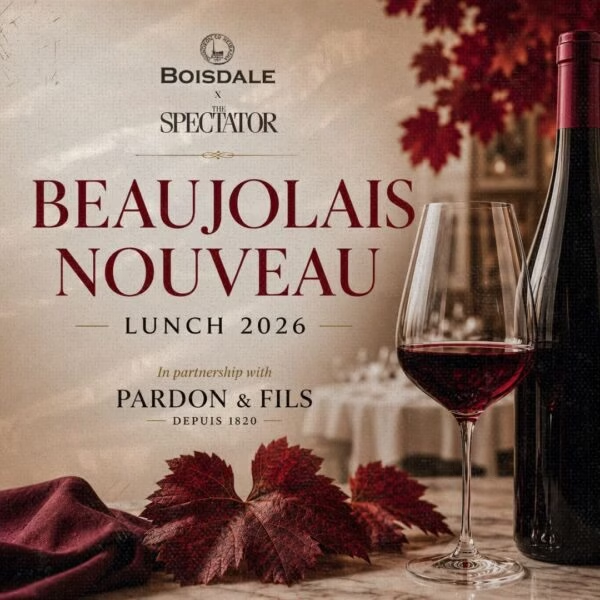
Boisdale & The Spectator Beaujolais Nouveau Lunch 2026
Boisdale of Canary Wharf
Thursday 19 November | 12pm
Boisdale and The Spectator are bringing Beaujolais Nouveau Day back to the UK’s vinous calendar in partnership with Pardon et Fils, winner of the Trophy for Best Beaujolais Nouveau nine times and ten Gold Medals at the Trophée International du Beaujolais Nouveau Lyon since 2002.
Five-course lunch built around seven Pardon et Fils wines: Beaujolais Nouveau 2026 and Beaujolais Nouveau Rosé 2026 at reception, followed by Beaujolais Villages Nouveau with the first course, Chiroubles 2024 Les Chanteranes and Brouilly 2024 with the next two courses, Fleurie 2024 Domaine Pardon with the main, and Morgon 2023 Côte du Py with the cheese.
Guest of honour: Martin Vander Weyer, Business Editor of The Spectator
Hosts: Boisdale founder Ranald Macdonald and Douglas Harrison
Tickets include a 5-course lunch and all the wines:
£169 standard | £145 for Boisdale Members
Click here for full details & tickets
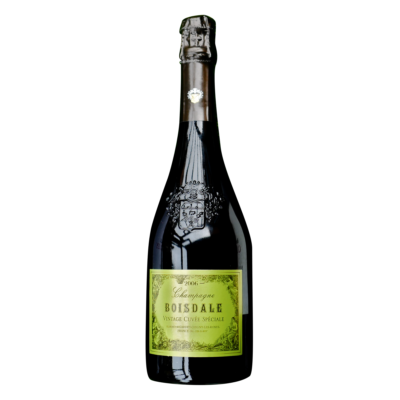
Comment for a chance to win a bottle of Vintage Champagne!
Send us a comment about this article, or ideas for future articles or interviews you would like to read. If we decide to publish any comments in future, you will win a bottle of Vintage Champagne.
Coming up at Boisdale
Discover what's going on across our famous venues

Membership
The Boisdale Club exists to generally encourage the enjoyment of life with a specific focus on delicious wine, Cuban cigars, Scottish malt whisky, live music and interaction between its members.
Please click apply now to find out more and sign up to the Boisdale Club.