
As Chancellor, Churchill could not have prevented the Great Depression; as Prime Minister, a few years later, he had to deal with some of its military consequences. Fortunately for Britain and the world, he was up to the challenge.
Bruce Anderson
A former political editor of The Spectator, Bruce Anderson has written for many of the UK’s leading newspapers and magazines. Born in Orkney and educated at Campbell College, Belfast and Emmanuel College, Cambridge, where he read history, Bruce is a keen oenophile and, mostly eschewing politics, writes a fortnightly drinks column for The Spectator.
Throughout his early career, Winston Churchill always revelled in controversy, and on occasions he provoked it. From the beginning, he seemed to be a strong candidate for political eminence.
In one of the final eras of aristocratic political dominance, an able young man from a ducal background could expect early preferment; what would now be called “entitlement”. Churchill did indeed take that for granted.
Yet there were always problems. Churchill's father, Lord Randolph, was also a young man of brilliant promise. He became Chancellor of the Exchequer at an early age; full of ambition, there seemed to be no barriers to those ambitions: the premiership itself appeared to be within his grasp.
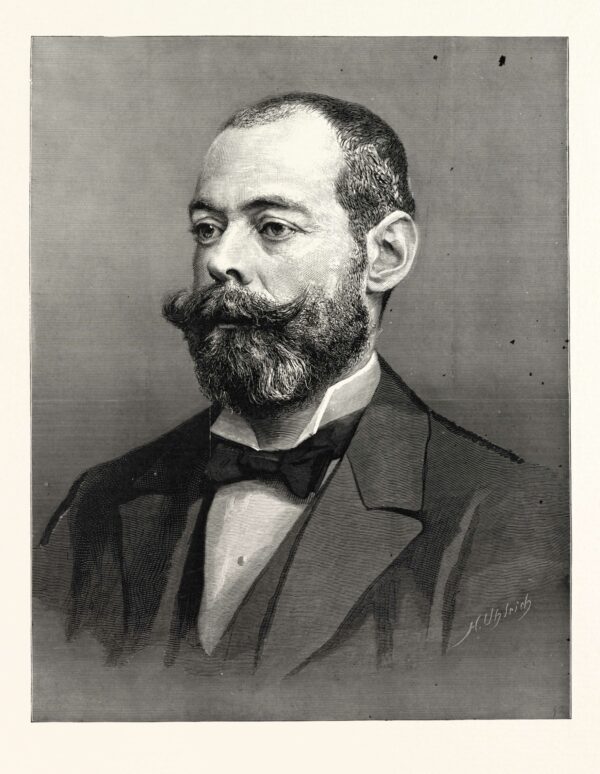
But Randolph lacked solidity and judgment. He came into conflict with Lord Salisbury. Although less colourful than Gladstone, that paladin of the house of Cecil could be regarded as Queen Victoria's greatest Prime Minister. He had a massive solidity that Churchill lacked. There was a clash. Salisbury won. Randolph resigned from office and his health then gave way, possibly due to syphilis. The House of Churchill appeared to have turned into the House of Icarus.
Twenty years later, some sceptics saw Winston Churchill as a second Icarus, destined not for the heights, but for another fall. The early and middle phases of his career did nothing to assuage those doubters: as Home Secretary, an office which normally demanded a certain gravity on the part of its holders, he seemed inclined to excitability, turning up in person to take command of the Siege of Sidney Street, when a few anarchists exchanged fire with policemen. This was not how such matters were normally conducted.
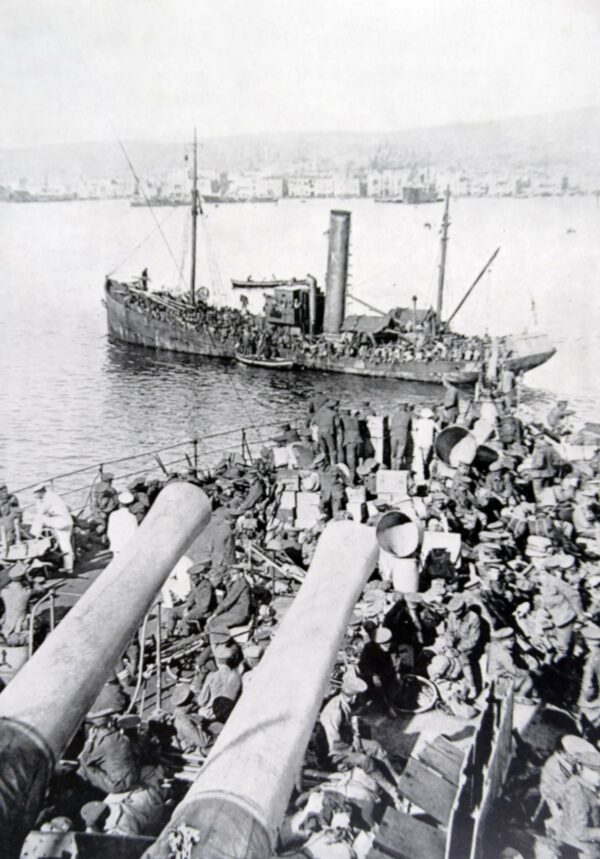
Then there was Gallipoli. Churchill knew that war meant a butcher's bill, but he hated the thought of wasting lives needlessly. He was always ready to employ a powerful intellect and strategic radicalism to search for an alternative to sending millions of men to chew barbed wire in Flanders.
Hence Gallipoli, an attempt to force a way through those narrow straits, open the road to Constantinople, thrust a dagger into the underbelly of German-Austrian domination of Central and Eastern Europe, knock the Turks out of the war, bring Bulgaria and Romania in on the allies' side, make it easier to reinforce Russia, and thus swing events decisively against Germany.
Dramatic stuff, and as long as military history is studied, that campaign will be re-fought. There is an argument that Gallipoli failed because Churchill only half-persuaded his colleagues. Had he been given bolder generals and admirals, and more materiel, it might have worked. Others say that the obstacles were too great. Above all, we under-estimated the Turks, who were dogged, brave fighters, and formidable in defence.
Churchill survived, although “Gallipoli” was regularly used as a term of abuse during his conflicts on the hustings. But by the 1920s, he was still too formidable to ignore. In 1924, Balwin won an election and wanted to reunite the Conservative party.
Although Churchill had broken with the Tories twenty years earlier, he then more or less rejoined them during the wartime coalition. He was still widely distrusted in some Tory circles. but Baldwin sought harmony. There is a vulgarism, which was uttered much later by Lyndon Johnson about J. Edgar Hoover: “I'd rather have him inside the tent pissing out than outside the tent pissing in”. Though Baldwin would never have said anything like that, he would have understood it. He protected his “tent” by making an offer which delighted Churchill: the Chancellorship.
This was not necessarily a ministerial misfit. Before the war, Churchill had been interested in social policy; influenced by Bismarck, he believed in using the State to improve social conditions and, like Bismarck, he believed that men brought up in happier social circumstances would make better soldiers.
“As Prime Minister, a few years later, he had to deal with some of its military consequences. Fortunately for Britain and the world, he was up to the challenge.”
Churchill and others had been alarmed by the spavined, hollow-chested specimens who turned up at the recruiting offices to try to join up during the Boer War. During the Liberal government, he was ready to cooperate with the Webbs – Sidney and Beatrice, co-founders of the London School of Economics – and other reformers to put matters right.
By 1924, however, a new priority preoccupied the Treasury. In order to symbolise a full recovery from the Great War, the weight of establishment opinion was in favour of rejoining the gold standard, at the pe-war parity of $4.86 to the Pound.
Initially, Churchill was unconvinced. By strengthening sterling, the measure would have been deflationary and would also have priced British goods out of export markets. This was especially damaging to the coal industry. In general, bankers would benefit from the gold standard, but manufacturers would suffer. Recognising this, Churchill declared that; 'I would rather see finance less proud and industry more content.' But official opinion prevailed, reinforced by national pride.
The coal owners responded to decreased revenues by cutting wages. This provoked a strike, which led to the General Strike. At that stage, Churchill's natural belligerence kicked in. Baldwin's conciliatory instincts were brushed aside. Churchill took charge of the government's propaganda, supervising an anti-strike newspaper, The British Gazette. After six months, the miners were defeated, leaving a legacy of bitterness.
What other legacy? By rejoining the gold standard. Churchill has often been blamed for laying the foundations for the Great Depression. This is unfair. A large number of factors were involved. The gold standard, deflation in America, over-exuberance on Wall Street, the crippling of the German economy through reparations - and a failure to counteract the slump by widespread reflation.
Keynes understood this earlier than most and expressed his views in a coruscating pamphlet. “The Economic Consequences of Mr Churchill”. This helped to pin the blame on Churchill, to an unfair and exaggerated extent. Almost the entire weight of frock-coated orthodoxy was in favour of the measures which led to depression, slump, unemployment and political chaos. Economic failure incited Fascism and Communism.
As Chancellor, Churchill could not have prevented the Great Depression; as Prime Minister, a few years later, he had to deal with some of its military consequences. Fortunately for Britain and the world, he was up to the challenge.

Comment for a chance to win a bottle of Vintage Champagne!
Send us a comment about this article, or ideas for future articles or interviews you would like to read. If we decide to publish any comments in future, you will win a bottle of Vintage Champagne.
Coming up at Boisdale
Discover what's going on across our famous venues
Membership
The Boisdale Club exists to generally encourage the enjoyment of life with a specific focus on delicious wine, Cuban cigars, Scottish malt whisky, live music and interaction between its members.
Please click apply now to find out more and sign up to the Boisdale Club.