
Finding Songs for the King
Finding Songs for the King
Don Reedman
I was born and grew up in Wagga Wagga, a New South Wales town of about 20,000 people at the time, halfway between Sydney and Melbourne. My lifelong passion for the music of Elvis Presley was ignited, in 1957, by the release of Jailhouse Rock, Elvis’s third movie: aged 11, far too young for what at the time was considered a controversial and definitely adults-only film, I managed to sneak into Hoyts Theatre and watch it.
Elvis’s charisma, his raw energy, was extraordinary. I’d never seen anything like it, Wagga Wagga had never seen anything like it, and there must have been small towns all over the world that were just as astonished.
From that moment, I knew I wanted to be a part of the music business. I made it to England in January 1969 full of ambition, but I never thought back then, even as an idealistic kid, that Elvis and his music would play such a huge part in my life.
I landed a job as a promotion manager for Welbeck Music, and the first song I was given to plug was Sugar Sugar by The Archies. I actually had sugar sachets printed with a line saying “Sugar Sugar: The Archies, with compliments, Don Reedman, Welbeck Music”: that way, the BBC radio producers got to know both me and the record I was plugging. Luckily it worked: the record went to number 1 and stayed there for eight weeks.
Soon after, I was invited to join Carlin Music, the most successful independent
music publishing company in the UK. They also managed Elvis’s two music publishing companies, Gladys Music and Elvis Presley Music. My job was to listen to the songs we had available, persuade a top artist to record one of them, and with any luck they (and we) would have a hit.
As well as great American writers like Jimmy Webb (By The Time I get To Phoenix, Macarthur Park, Wichita Lineman) and Bobby Darin (Splish Splash, Dream Lover), Carlin also represented Jerry Leiber and Mike Stoller, who had composed the score for Jailhouse Rock. (Although the story goes that they hadn’t written anything until, in desperation, Jean Aberbach, the director of Hill & Range music publishers, locked them both in a hotel room. Four hours later, they had written four songs: I Want To Be Free, Treat Me Nice, (You’re So Square) Baby I Don’t Care, and Jailhouse Rock.)
Carlin also had some great British songwriters on their books: Ken Howard and Alan Blaikley, who wrote Elvis’s 1970 hit I’ve Lost You; Les Reed, who co-wrote Delilah and It’s Not Unusual for Tom Jones; and Guy Fletcher and Doug Flett, who wrote hits for The Hollies and Cliff Richard, and were the first British songwriters to write a song for Elvis: The Fair’s Movin’ On, the B-side of his 1969 single Clean Up Your Own Backyard, which I was also involved with.
And there was Clive Westlake. He had ambitions of being a recording artist: he lacked the charisma that a star needs, and he wasn’t the best singer, but he was a great songwriter. He had written a song called It’s A Matter Of Time, which he played for me. He wanted to record it himself, but I knew it would be perfect for Elvis.

Ever since Jailhouse Rock back in Wagga Wagga, Elvis had been in my DNA, so it was a joy to look for songs for him, and I’d already found a few: Twenty Days And Twenty Nights, co-written by Clive, and Just Pretend, by Fletcher and Flett, as well as I’ve Lost You and The Fair’s Movin’ On.
I’d listen to the demos that the writers made: they often used a session singer called Peter Lee Sterling who could sound like Elvis, making it easier for Elvis to imagine how his vocals might work when he was in the studio.
In 1972, just at the time I had It’s A Matter Of Time in my head, the president of Carlin, Freddy Bienstock (Jean Aberbach’s cousin, incidentally), made one of his frequent visits to London and asked me to find new material for Elvis. He was scheduled to record in Memphis in the following couple of months.
So, without Clive knowing, I quietly borrowed the demo from his drawer while he was on holiday, and I played it to Freddy. I told him that Elvis needed an up-tempo song to prove to the world that he was still the King of Rock’n’roll. Freddy agreed, played it to Elvis, and he loved it. Elvis’s producer Felton Jarvis matched it with Dennis Linde’s Burning Love, Elvis recorded them both, and the single went to number 2 in the American charts. I was over the moon, and Freddy was delighted that we had come up with a double A-side smash for Elvis. It turned out to be Elvis’s last top ten hit.
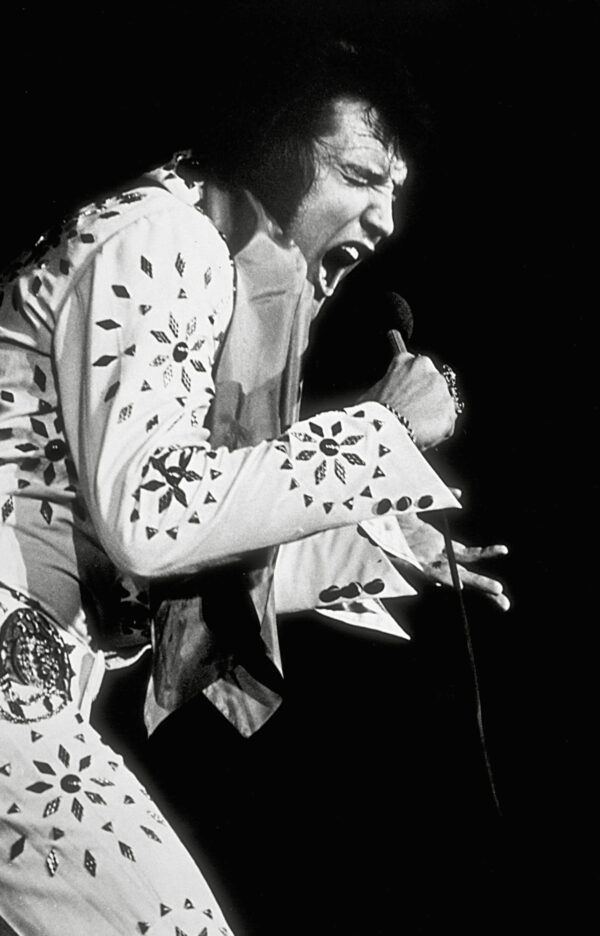
I always felt that Elvis deserved bigger and better production values on his records, particularly the ballads. He had a wonderful operatic tone in his voice that could cope with, and be heightened by, the sound of a full symphony orchestra.
And so, some 45 years later, having had this idea in my mind and having created my own original concepts with symphony orchestras on two hit albums – Classic Rock, with the London Symphony Orchestra (we recorded another eight albums), and Hooked On Classics, with the Royal Philharmonic Orchestra (and two more of them) – and having made four albums with the legendary Michael Crawford employing the talents of both of those great orchestras, I came up with the concept of taking Elvis’s great songs, including both hits and lesser-known album tracks, and having them arranged for an album of great quality and class for the RPO.
It took me five years of determination and passion to convince the powers-that-be at Sony Music. Then I had the thrill of meeting Priscilla Presley, Elvis’s ex-wife and, as an actress in Dallas and the Naked Gun film series, a star in her own right, as well as a smart businesswoman who had overseen the opening of Graceland as a museum. At the time, she was performing in pantomime at Wimbledon, so I invited her to afternoon tea and told her about my vision for Elvis.
Thankfully, she thought the idea was great, and said it was something that Elvis would have loved to do. So between us we convinced Sony to let me go into Abbey Road studios with the RPO, and try out my idea.
Well, it worked a charm and the album If I Can Dream was born. It went straight to number one, selling more than a million CDs in the UK alone. Worldwide, it has sold 5 million copies (and counting).
We went on to make two more albums with Elvis and the RPO, and launched six tours with Elvis and the RPO, including venues in the UK, Europe... and back in Australia, where my dream had been born all those years before. Elvis may have left the building, but his spirit lives on in our hearts.

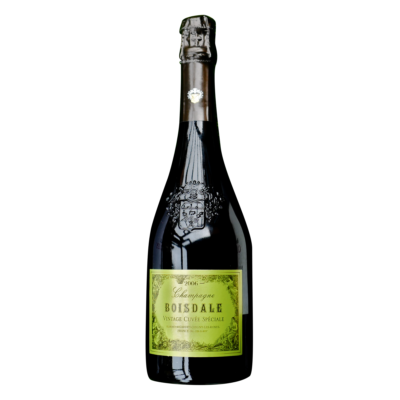
Comment for a chance to win a bottle of Vintage Champagne!
Send us a comment about this article, or ideas for future articles or interviews you would like to read. If we decide to publish any comments in future, you will win a bottle of Vintage Champagne.
Coming up at Boisdale
Discover what's going on across our famous venues
Membership
The Boisdale Club exists to generally encourage the enjoyment of life with a specific focus on delicious wine, Cuban cigars, Scottish malt whisky, live music and interaction between its members.
Please click apply now to find out more and sign up to the Boisdale Club.