
Are the British Obsessed with Class?
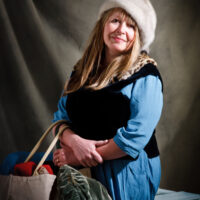
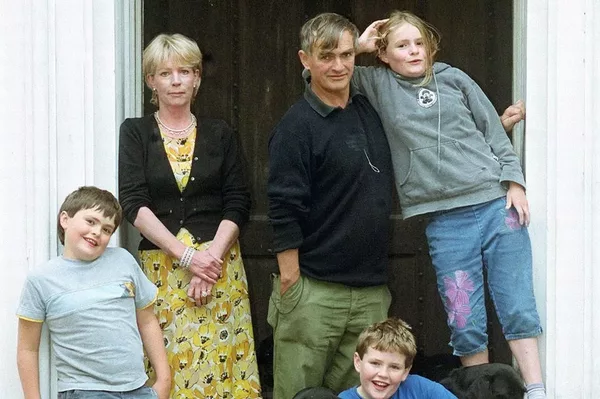
Mary Killen is a Northern Irish etiquette expert who writes an agony column for The Spectator. She is also the author of several books, including The Diary of Two Nobodies, co-written with her husband, the artist Giles Wood. Over the past decade, the couple have become well-known to TV viewers as cast members of the hit Channel 4 show Gogglebox.
Mary Killen
In 1984, when I began my journalistic career by working on Tatler magazine, I would have said yes, the British certainly were – if not exactly obsessed by class distinctions and class snobbery – certainly very interested in these issues. They were either anxious about questions of etiquette and status or, if they were confident in their own grandeur, amused by the etiquette and status concerns of less secure others.
The early 1980s had seen a resumption of interest in class. The breaking down of class barriers in the 1960s had been so exciting and positive, but the whole flower-power/free love vibe had given way to a seedier 1970s, with women being used as human spittoons by opportunistic men accusing them of being frigid if they wouldn’t comply. All this tawdriness (and the depressingly grungy fashion) was soul numbing. Then there was the death in 1980 of John Lennon: the ultimate irresponsible role model.
Suddenly, in 1981, a beautiful, ladylike virgin hove into view to marry a prince, and we were all in the mood for that much more chaste and romantic story. The advent of Princess Diana reignited our obsession with class. The Sloane Ranger Handbook, published in 1982, with Di on the cover, topped the best seller list for two years, selling more than a million copies.
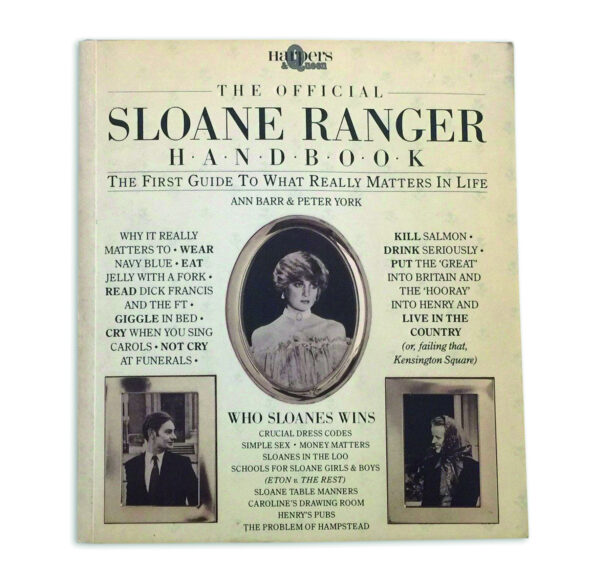
It is a very witty and observant book, but the fact that even otherwise book-free households had a copy reflected how dormant snobbery had been reawakened by Princess Di. Everyone was now interested in historic houses and social interconnectedness, napkins and dovecotes (pronounced “ducuts”).
Tatler, in 1980 an almost defunct magazine with a small circulation, featuring black-and-white photos of sporting events attended by grandees with weather-ruined complexions, was suddenly being edited by Tina Brown. She “re-birthed” the upper classes and began to celebrate them, although in a mocking, not reverential way. “The magazine that bites the hand that feeds it,” said the strapline.
I compiled an openly snobbish and sexist line up of rich, eligible and heterosexual singleton males over the age of 70, which I called Dowager Dateline.
Other writers were also drawn to Vogue House, Hanover Square, from where Condé Nast produced Tatler, financing all our lunches, drinks and dinners as long as we were “researching” an article. Before this, there had been no such concept as “social currency”.
Mark Boxer took over from Brown as editor, and mid-1980s Tatler was the place to work. Stephen Fry and Edward St Aubyn had their first pieces published there; Craig Brown, Jonathan Meades, Michael Roberts, Isabella Blow, Alexandra Shulman, Dafydd Jones and Michael Roberts were on the staff with me; and there was Peter Townend, who ran the deb (debutante) season.
And, while we mocked the upper classes as well as glamorising them, the mockery was affectionate (and sometimes lustful, if Mark Shand or Lucian Freud were our subjects.)
We revelled in quaint aspects of the aristocracy. Who, except the very well connected, was aware that the obscure Scrope (pronounced “Scroop”) family was one of England’s grandest? “It bears the most famous coat of arms in English heraldry and descends in the direct male line from medieval lords who feature in the plays of Shakespeare” wrote the genealogist Hugh Massingberd.
We profiled the then obscure Devon landowner Francis Fulford (later the subject of a reality TV series, The F***ing Fulfords). Only Massingberd knew that “in the English landed aristocracy, between ten and twenty families have the distinction of being descended in the male line from a medieval ancestor who took his surname from lands which they held and still hold. Therefore not ‘Lord Alderney’ but ‘Alderney of Alderney’, ‘Wolselely of Wolseley’ and ‘Fulford of Fulford’”. I found it enchanting that Francis Fulford’s postal address was “The Fulford of Fulford, Fulford, Fulford.”
I compiled an openly snobbish and sexist line up of rich, eligible and heterosexual singleton males over the age of 70, which I called Dowager Dateline.
Snobbery peaked around the mid-1990s. I was then working on Harpers & Queen, another class-obsessed publication. It had long been home to Jennifer’s Diary, written by Betty Kenward, a social column whose annual output was 140,000 words, 80,000 of which were names, and in which every private party-giver longed to appear.
Mrs Kenward – along with Peter Townend of Tatler, Hugh Massingberd (obituaries editor of the Daily Telegraph), Charles Kidd of Debrett’s, the ladies involved in the Court Circulars of the Telegraph and The Times, and the people at the College of Arms – was one of a dying breed: these were the only people who could write titles correctly. Today, Lord Sugar calls himself Lord Alan Sugar, and even Earl Spencer mispronounces the name of Althorp, his own house.
One day, the staff of Harpers was called to a marketing meeting to be told that class was “over”, that it was a dead concept. Nobody was interested in seeing names of people who had done nothing in their own right but were just children of titled people. From now on, we would write about the House Beautiful and the Green Lifestyle.
And aristocrats, perhaps led by the royals, began marrying into the lower classes. It was not just because snobbery was dead again and the class system irrelevant, it was partly a hybrid-vigour thing, and partly a new-money, old-name thing. Our own Royal Family is the most downwardly mobile in the world (and the Royals, ironically, the least snobbish or racist of any group) but in England we have always welcomed new blood.
This is unlike the French system, in which the aristocrats became so feeble by intermarriage that a defective, interbred stock resulted. Look today at the Duke of Rutland and the Earl of Carnarvon, both married to capable, middle-class women who are keeping their shows on the road.
Why else do you think they employ English aristocrats as glorified servants in the form of lawyers, art dealers, party planners, estate agents, decorators and financial portfolio managers? They want to buy into that endangered commodity: class.
But are we still obsessed by class? Well yes, but we keep quiet about it now, even though we all fall on Nicky Haslam’s tea towels at Christmas because we can pretend we are just laughing at what Nicky finds “common”. In fact, the tea towels can still trigger social anxiety.
The big houses and big families may have had to sell up, but we are still snobs about the looks, manners, styles and codes of honour of the people that centuries of selective breeding have produced. And an international group of oligarchs are just as snobbish and obsessed by class.
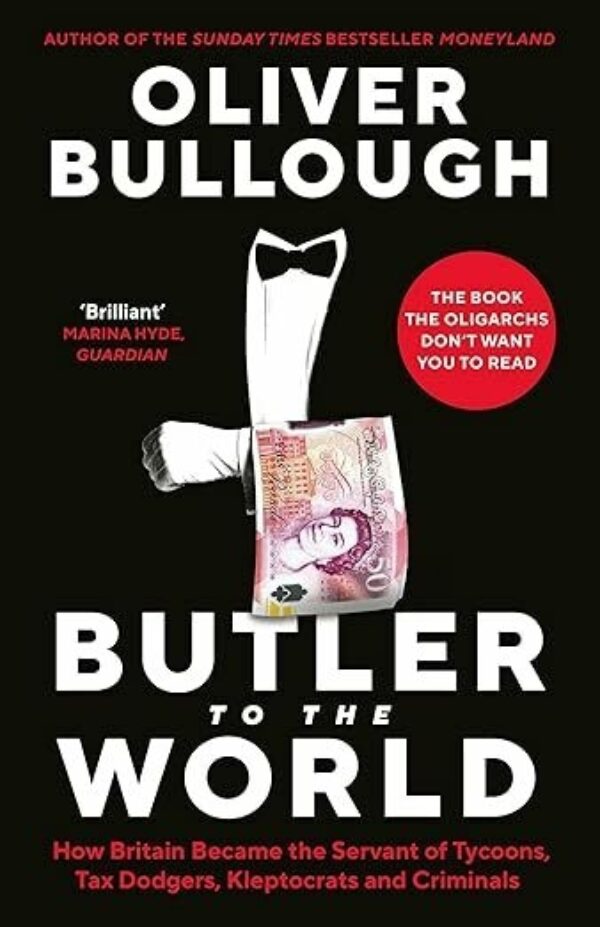
Why else do you think they employ English aristocrats as glorified servants in the form of lawyers, art dealers, party planners, estate agents, decorators and financial portfolio managers? They want to buy into that endangered commodity: class. Read Butler to the World by Oliver Bullough if you want to immerse yourself in the embarrassing truth.
Yet like recusant Catholicism, snobbery still exists, but behind closed doors. It is the truth that dare not speak its name.
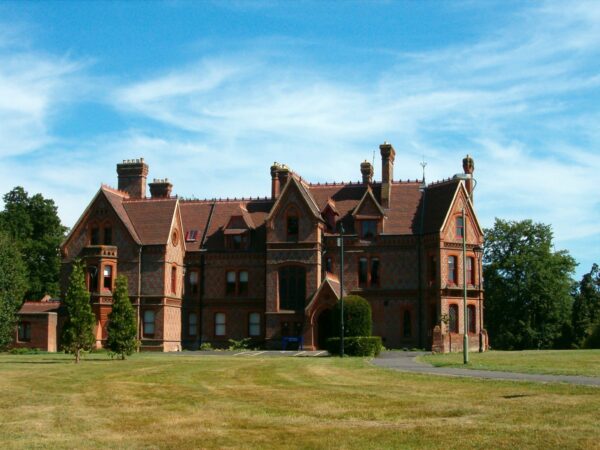
Recently, my husband and I went to stay at Foxhill Manor in the Cotswolds, a country house hotel of the sort that would have, forty years ago, posed as a mini-Downton with butlers and maids. This one is all-inclusive, so you don’t need to flash money or tip anyone.
At Foxhill, with its eight double bedrooms, everything seemed to be signalling that the class system was over, and you too could stay in this beautiful, stone-built house with open log fires crackling (dogs welcome) and pretend you were at a Cotswolds house party.
There was no butler, no housekeeper; in their place, two staff called Rebecca and Ed, who wore clean trainers and jeans and – without a trace of obsequiousness – would get you anything you wanted: as long as you could pay, of course. £1 195 a night for two. And no snobbery evident anywhere. Fortunately, the aristocracy still retains a few such houses in which some lucky folk can stay for free.
Comment for a chance to win a bottle of Vintage Champagne!
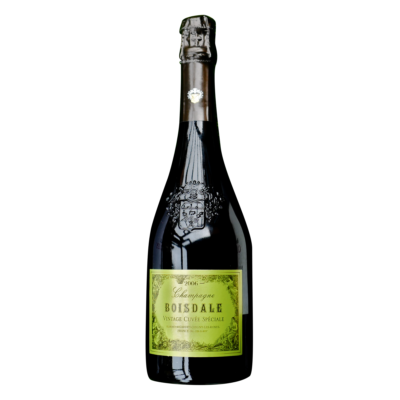
Send us a comment about this article, or ideas for future articles or interviews you would like to read. If we decide to publish any comments in future, you will win a bottle of Vintage Champagne.
Coming up at Boisdale
Discover what's going on across our famous venues
Membership
The Boisdale Club exists to generally encourage the enjoyment of life with a specific focus on delicious wine, Cuban cigars, Scottish malt whisky, live music and interaction between its members.
Please click apply now to find out more and sign up to the Boisdale Club.