
A Perilous Quest
Count Nikolai Tolstoy is a historian and author of White Russian descent, known for exposing Allied forced repatriations after World War II and challenging official narratives.
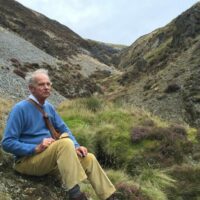
Count Nikolai Tolstoy
At the beginning of 1978, I published my book Victims of Yalta, which recounted the tragic and shameful story of the forced repatriation of well over two million Soviet citizens and others handed over by the British and US governments following the close of World War II.
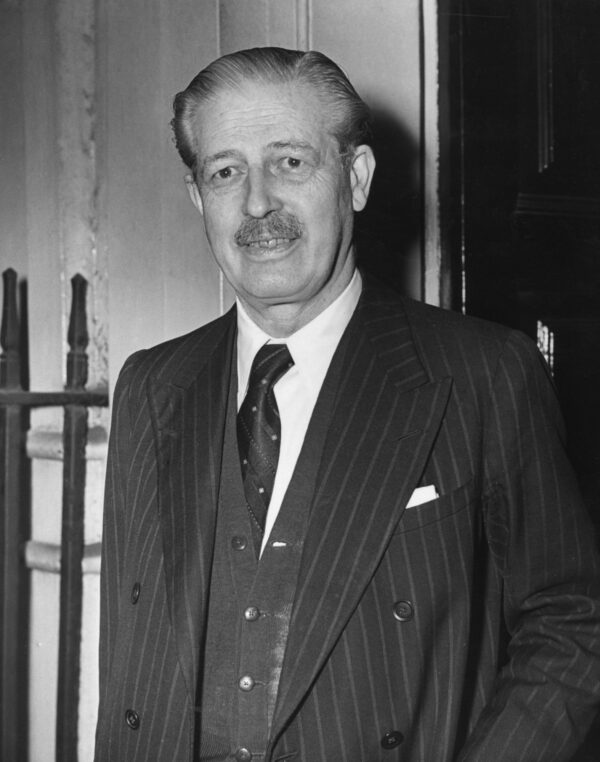
At the Central Mediterranean Force, commanded by Field Marshal Alexander, the Political Adviser was Harold Macmillan. On 13 May 1945 he flew to newly-occupied Austria, where he issued a “verbal directive” to the local Corps Commander, General Keightley.
In his diary compiled at the time, Macmillan noted of his visit that “among the surrendered Germans are about 40 000 Cossacks and ‘White’ Russians, with their wives and children. To hand them over to the Russians is condemning them to slavery, torture and probably death. To refuse is deeply to offend the Russians and incidentally break the Yalta agreement. We [he and Keightley] have decided to hand them over.”
On his return to Allied Headquarters at Naples, Macmillan covertly pushed through his unexplained and brutal policy. Most of the Cossacks were either slaughtered on being handed over to SMERSH at Judenburg or died subsequently in Gulag’s slave-labour camps.
Macmillan lied when he claimed that the Yalta Agreement of 1944 covered these shameful operations: in reality, the Agreement related to mutual repatriation of citizens in enemy hands at the close of hostilities. Despatching them to “slavery, torture and probably death” was naturally not intended by the British and American negotiators at Yalta (apart from Stalin, of course), requiring as it did the gravest violation imaginable of the 1929 Geneva Convention and the laws of humanity generally.
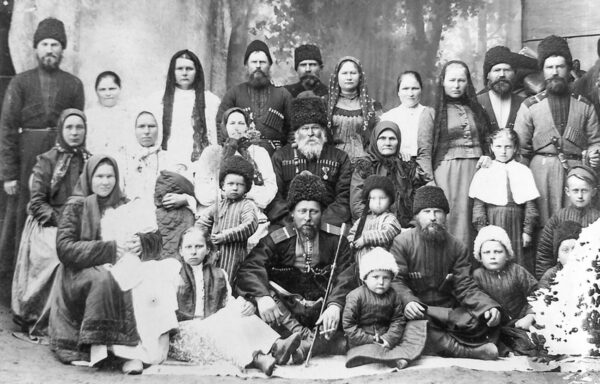
On the day before Macmillan’s fateful visit to Austria, 15 Army Group in Italy reported that: “Eighth Army are holding some 40 000 Germans and 50 000 Cossacks, of which latter 20 000 are women and children, in their present Zone of Action”. I fear Macmillan was as merciless as any SS killer.
To this shameful action the two British war criminals gratuitously arranged a parallel handover to the genocidal dictator Tito of tens of thousands of Yugoslav refugees in British hands. The betrayal of these troops and refugees to certain death at the hands of Tito’s executioners was if anything more appalling – certainly more immediate – than the fate accorded the Cossacks.
The great majority of Keightley’s chief-of-staff Brigadier Toby Low (later Lord Aldington)’s victims were slaughtered: most of them were thrown into great natural chasms in the forest of Kocevje, where they were butchered by shooting. High explosives were detonated among the ever-increasing heap of victims.
Being of White Russian stock myself (my father escaped from the Soviet Union as a boy in 1920) I was more struck than might perhaps be others by Macmillan’s inadvertent admissions. As the Cossacks were serving in the German Army in German uniforms, they fell under the protection of the 1929 Geneva Convention. They were accordingly prisoners of the power to which they had surrendered: in the case of the Cossacks, this was the British.
“I was smuggled by village priests and foresters to the dreadful natural pit in the forest of Kocevje, where thousands of victims had been slaughtered.”
While the 1944 Yalta Agreement provided for the humanitarian return of Allied prisoners of war and refugees to their own countries immediately following the cessation of hostilities, it did not and could not legally transfer them to a third party likely to treat them with extreme brutality.
The situation was further exacerbated by the fact that the USSR had never acceded to the Geneva Convention, and (as Macmillan explicitly acknowledged) was notoriously cruel in its treatment of “class enemies”. Worse still from the perspective of international law was the inclusion of White Russians for “return”. This term covered people like my father who had fled Soviet rule, never held Soviet citizenship, and had in consequence either acquired that of the country where they had settled, or bore a League of Nations “Nansen passport”.
Stalin was particularly concerned to lay hands on such people, whom he correctly regarded as being inherently hostile to Soviet oppression. It was in large part my background which made me particularly alert to this consideration. Previous English and American writers on the forced repatriation assumed that the White Russians prominent among the Cossacks were included “by mistake”, and despite Macmillan’s inadvertent admission in his diary, this pretext was eagerly adopted by subsequent defenders of his callous policy.
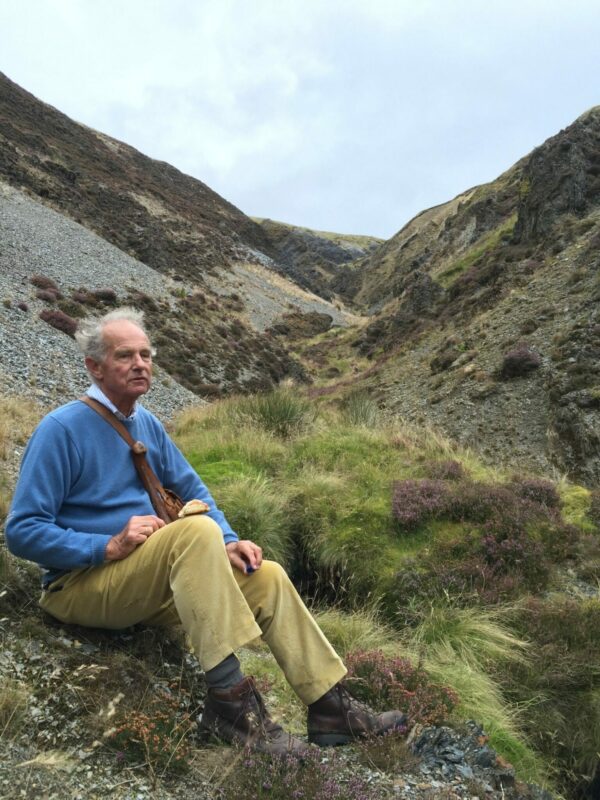
Over the years following publication of Victims of Yalta, fresh evidence inevitably came to light, in particular concerning the parallel secretive delivery to Tito of thousands of fugitive Yugoslav royalists and others. At a time when Communist rule in the former Yugoslavia was still all-powerful, I was smuggled by village priests and foresters to the dreadful natural pit in the forest of Kocevje, where thousands of victims had been slaughtered. Their piled bones remained as mute testimony to this abominable policy.
In due course I published a fresh book, The Minister and the Massacres, which included all the fresh evidence known to me at the time of writing. The Minister was of course Macmillan, which aroused frenzied rage on the part of the Establishment. But this did not distress me unduly!
Macmillan died about this time without ever having condescended to explain his responsibility for flagrant violations of international law and its horrific consequences. Keightley had died years earlier, before I could speak to him. I had, however, interviewed British soldiers of all ranks who had been involved, the overwhelming majority of whom expressed, both at the time and since, their detestation and shame at being compelled to participate in operations all too comparable to those practised by the defeated Nazi enemy.
After Macmillan and Keightley had died, the sole surviving author of these deliberate infractions of the Christian code and international law alike was Lord Aldington, who had deliberately altered orders to confirm the inclusion of identified non-Soviet citizens among those particularly wanted by Stalin. Precisely similar conduct perpetrated by German chiefs of staff had been punished at the Nuremberg Tribunal with lengthy terms of imprisonment.
However, in consequence of events too complex to be recapitulated here, the only person punished for these mass war crimes was the writer of the present article. In 1989 I was fined £1 500 000 in the High Court, together with £500 000 to cover Aldington’s costs. In fact, it turned out that Aldington had perjured himself when claiming costs, since it subsequently emerged that they had been secretly paid by Sun Alliance, of which Aldington had been Chairman.
However, legal judgments on historical events may prove delusory. Within a year, Aldington’s alibi in 1945 was blown apart by unique contemporary evidence of his departure date discovered in the Public Record Office.
More astonishing still for me was the volte face in my position brought about by the collapse of the Soviet Union in the early 1990s. While in exile, Alexander Solzhenitsyn had been an outspoken defender of my cause, arranging for a Russian translation of Victims of Yalta to be published in Russian.
On his return to Russia, he became close to President Yeltsin, whom he urged to come to my aid. Yeltsin shared his view and instructed his chief-of-staff to contact me. In the course of a week, he telephoned me twice, enquiring what the President could do to help.
Although gratified by this offer, I could not see what even he might achieve. However, at the close of the same week I received a further call, in which I was politely asked whether it would assist were the President to grant me access to the relevant secret Soviet files!
“I should think so!” was my gleeful response, and within a couple of weeks I was received in the dreaded Lubyanka building, where the deputy head of the FSB (formerly KGB) General Kondaurov presented me with a bulky file of photocopied SMERSH documents from 1945.
There is insufficient room here to explain the extraordinary extent to which the new evidence upheld my accusations, but that it does to an unanticipated extent is set out in my recent book Stalin’s Vengeance. (British publishers proving afraid to publish it, it came out in the United States).
I had from time-to-time entertained nightmares about entering the dreaded building but was now received with courtesy and total co-operation by the courteous Kondaurov. As General Volkogonov, head of the Russian archives, genially declared to me beforehand: “I hope you can see that your name still carries weight in our country.”
A curious postscript to this dramatic visit occurred in the following year. Finding myself again in Moscow (I bear a Russian passport as well as a British one), I received from General Kondaurov an invitation to lunch at the Hotel Metropole, former headquarters of the Comintern.
After some pleasant discussion about this and that, he startled me with an invitation to head the international operations of Bank Menatep, in which he now occupied a senior position. I felt obliged to decline: not least because I am so innumerate that my wonderful wife Georgina (a loyal partner in all our adventures) long ago took over management of our household accounts.
Meanwhile, in the eyes of the English judiciary only one person remains guilty with regard to postwar British war crimes – and that is not Lord Aldington! Although his perjury is now public knowledge, the judiciary has needless to say made no move to throw out his claim for expenses; furthermore, the law has always held that the dead cannot be libelled. Although Aldington died at the turn of the century, my legal adviser’s submission that the court injunction should accordingly be lifted has been met with an evasive refusal.
Comment for a chance to win a bottle of Vintage Champagne!
Send us a comment about this article, or ideas for future articles or interviews you would like to read. If we decide to publish any comments in future, you will win a bottle of Vintage Champagne.
Coming up at Boisdale
Discover what's going on across our famous venues
Membership
The Boisdale Club exists to generally encourage the enjoyment of life with a specific focus on delicious wine, Cuban cigars, Scottish malt whisky, live music and interaction between its members.
Please click apply now to find out more and sign up to the Boisdale Club.