
The Accidental Restaurateur
Our editor finds his old friend Rick Stein in reflective mood as he looks back at his career

Bill Knott
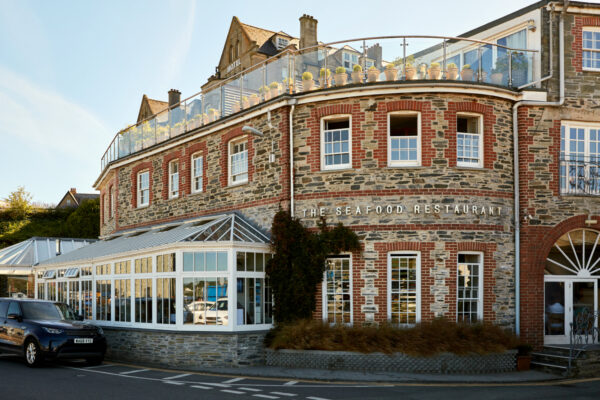
In 1974, the Great Western Club, a nightclub in the small fishing village of Padstow on the north Cornish coast, had its late-night licence revoked by the local magistrates. Its patrons, many from Padstow’s rival fishing families, had indulged in one fight too many: “trawler brawlers”, you might call them, prone to drinking too much Double Diamond and assaulting each other with anchor chains.
The club’s co-owner was Rick Stein who, with his friend Johnny, had taken on the building as a permanent home for the mobile disco he had run at parties in London. “I was declared ‘not a fit person to run a nightclub’. We still had bills to pay, so I needed to find a way of keeping our heads above water.”
They had lost the late-night licence, but they still had a restaurant licence. Rick had no real interest in becoming a chef, but it seemed the only way out. He had worked for seven months as a commis chef in a London hotel “which wasn’t especially grand, but they did have proper sections in the kitchen, so it taught me the ropes. And my parents were really good cooks, so I had come across the books of Elizabeth David and Julia Child.”
I would buy fish fresh from the quay every day: again, not for any reason other than it was there and it made sense
His early menus were simple. “Grilled lobster... grilled anything, really! I had inherited a salamander grill from the previous owner; apart from that I just had a six-burner stove.
“And the simplicity of my menus back then wasn’t based on some high-flown culinary philosophy: I didn’t know how to cook complicated dishes, and anyway I didn’t have the equipment. And I would buy fish fresh from the quay every day: again, not for any reason other than it was there and it made sense.
“But, in a way, that was the restaurant’s great virtue: Padstow always got busy in the school holidays, and we were open, we were right on the front, and we were cheap.”
Britain in the 1970s was not exactly a piscatorial paradise, unless you wanted your fish battered, deep-fried and served with chips. Even the fishermen didn’t eat much fish: Later, Rick recalls visiting Newlyn to film Taste Of The Sea with director (and long-time friend) David Pritchard: “David said ‘why don’t we film a piece in there?” pointing to the Fishermen’s Café.
“So we went in, asked what fresh fish was on the menu and they said ‘we don’t sell fish! This is a fishermen’s café.’”
He did find a few loyal diners in Padstow, though. “There was a guy called Herman Friedhoff, he was quite famous for being part of the Dutch Resistance during the war and even wrote a book about it [Requiem For The Resistance, 1988]. He and his wife had a house next door to the restaurant, and – because he was Dutch and really liked fish – they became regulars: I suppose they were our first discerning customers.”
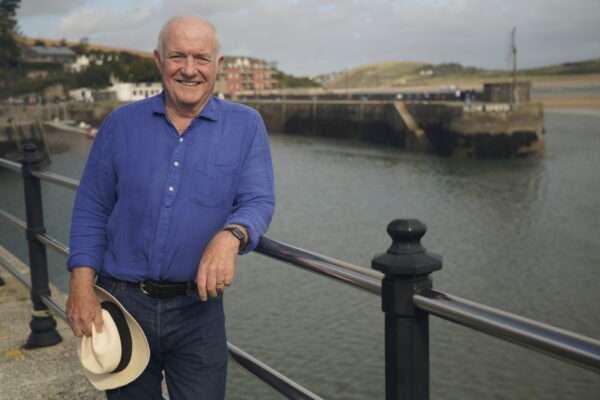
He and Jill, his first wife, ran the restaurant together: Rick in the kitchen, Jill front-of-house. By the 1980s, the long hours and hard work had eventually paid off, and both Rick and the restaurant were starting to attract attention from further afield.
Including the TV chef Keith Floyd, whose 1985 BBC show Floyd on Fish had launched his career. Floyd had been to The Seafood Restaurant several times and told his producer (David Pritchard again) that they should film in Padstow with Rick. Pritchard and Floyd set up a table-for-two on an old fishing boat at which Floyd, garrulous and bow-tied, and Rick, slightly nervous in his chef’s whites, shared a bottle of Alsace white and a locally-caught sea bass that Rick had cooked in his kitchen.
The section they filmed in the restaurant kitchen was notable for Floyd calling Rick “Nick” throughout: “I like to think that he had just temporarily forgotten my name”, recalls Rick, “but he could be quite mischievous, and he might well have been taking the piss.”
His profile, and his status in the food world, was raised still further when his journalist friend Richard Barber turned up for dinner with an editor from Penguin Books, who asked whether he would like to write a seafood cookbook for them. “So I did, but I wasn’t sure what anyone would make of it.”

Rick’s first book, English Seafood Cookery, was published in 1988. “Then the great cookery writer Jane Grigson, whose book Fish Cookery I loved, turned up at the restaurant, and I didn’t realise it at the time, but she must have been scouting us out, because the book won the Glenfiddich Award for Cookbook of the Year in 1989.”
Rick has no ambitions to write a novel of his own – “I’m no good at constructing a plot. Starters, main courses, puddings, that’s me!
I first met Rick a few years later, in January 1997, at the bar of his recently-opened St Petroc’s Hotel and Restaurant, a short stroll from The Seafood Restaurant. At midnight, just as we moved on to the second brandy, he turned 50.
I was interviewing him because, by then, he had become one of the brightest stars in the culinary firmament. His series Taste of the Sea, released a year and a half before, had been rapturously received, and won him another Glenfiddich Award.
David Pritchard, whose relationship with Keith Floyd had by that time broken down pretty much irreconcilably, was the director, although he initially had reservations about putting him on screen. As Rick told me that night, “the first time David saw me on camera he said, ‘you’re a bit like Forrest Gump, aren’t you?’”
But it was Rick’s thoughtful, diffident, natural style of presentation, skilfully captured by Pritchard, that shone through on Taste of the Sea, and a plethora of subsequent series, filmed all over the world. It was both a professional partnership and a deep friendship, cut short by Pritchard’s death in 2019.
Most chefs do not have what is sometimes called a “hinterland” – other interests and passions that round out their character – or even any real passion for food: some of them might just as well have taken an NVQ in spot welding. But Rick, and his old friends
Simon Hopkinson, Rowley Leigh, Shaun Hill and the late Alastair Little, is different. Music was an early passion – hence the disco and the nightclub – and so is literature: he read English at Oxford. “I got a third. So did Evelyn Waugh!” His book choice on Desert Island Discs was Anna Karenina, he loves Graham Greene, and he is currently devouring Anthony Powell’s magisterial A Dance to the Music of Time, all 12 volumes of it, “for the fourth time: I still find new things to enjoy in it.”
He has no ambitions to write a novel of his own – “I’m no good at constructing a plot. Starters, main courses, puddings, that’s me!” – but he has still managed to publish nearly 30 books since English Seafood Cookery, including Under A Mackerel Sky, his 2013 autobiography that candidly charts his chaotic younger life, including his father’s bipolar disorder: he took his own life when Rick was 19.
The book he released late last year, Rick Stein’s Christmas, is an altogether happier read, liberally seasoned with quotations from Thomas Hardy, Maya Angelou, Jane Austen, Charles Dickens, James Joyce, Shakespeare (and The Pogues), and full of enticing seasonal recipes.
His advice to Christmas cooks? “Don’t overcook the turkey! Portia, the home economist for the book and I cooked and re-cooked lots of turkeys, just to get the timings right, and we concluded that it's just a large chicken.
“Get it out of the fridge early – the night before, preferably – use a temperature probe, and don’t let it get above 65˚C. And just prepare as much as you can in advance: Christmas dinner is all about choreography.”
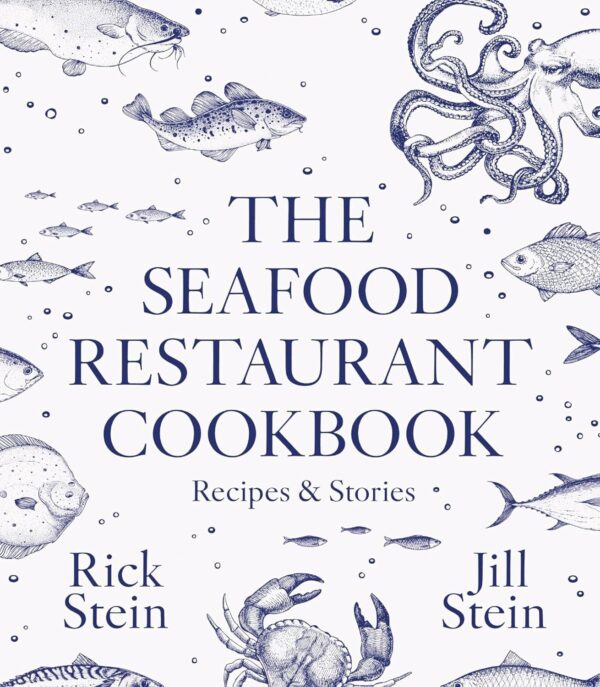
It is an October evening in Chiswick, and Rick and I are enjoying a pint or two of London Pride in a pub not far from the home he shares with Sas, his Australian wife, and his business partner in his two restaurants down under. His first wife, Jill, still owns and runs his UK restaurants with him, and has co-authored his latest book, The Seafood Restaurant Cookbook, released on 18th June.
Nearly three decades since we first met, and now aged 79, his curiosity about food and his love of restaurants remains undimmed, despite the economic headwinds that are severely afflicting the hospitality industry: “we’re surviving, it’s not desperate, but nor is it easy.”
What keeps him going? After all, he could comfortably retire. “I suppose it’s just that food still gets me really excited. I mean, I love literature and I love music, but I’m ashamed to say that I don’t know enough about them. Food is what I really know about.”
I love travelling for food: it’s such a universal language, such a passport to other cultures, that you don’t need to explain why you’re there. Everybody understands
And do his still extensive travels keep him curious, keep him fizzing with ideas? “They do. I guess the one person I aspire to in my travels is Anthony Bourdain.” Bourdain was an American chef, author of the best-selling Kitchen Confidential, and the presenter of the hugely successful No Reservations and A Cook’s Tour TV shows. He took his own life in 2018.
Coincidentally, Rick was in the same small town in Alsace, Kaysersberg, the night Bourdain died: it must have rekindled memories of his father’s suicide. He looks rueful. “I wish I’d gone out and had a beer with him, maybe I could have cheered him up.”
Rick has no plans to stop cooking, writing, travelling, or running his restaurants any time soon, and he is already working on a new book: Rick Stein’s Cookery Course: Recipes and Techniques from a Lifetime in the Kitchen. “And I love travelling for food: it’s such a universal language, such a passport to other cultures, that you don’t need to explain why you’re there. Everybody understands.
“I remember once that David Pritchard and I were in Corleone, Sicily, with a film crew, setting up a shoot at a venerable old pasta factory. The big news that day was that some Mafia kingpin had just been arrested after years in hiding, and someone said to me ‘oh, I suppose you’re here to cover the arrest?’”
“’No, I replied. “’We’re just here for the pasta.’”
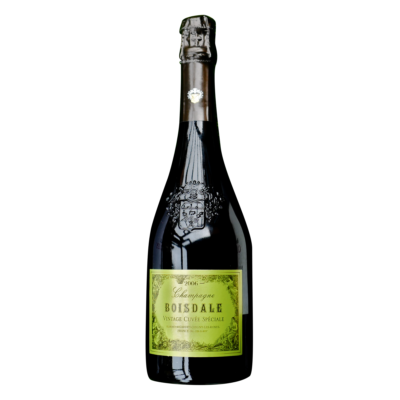
Comment for a chance to win a bottle of Vintage Champagne!
Send us a comment about this article, or ideas for future articles or interviews you would like to read. If we decide to publish any comments in future, you will win a bottle of Vintage Champagne.
Coming up at Boisdale
Discover what's going on across our famous venues

Membership
The Boisdale Club exists to generally encourage the enjoyment of life with a specific focus on delicious wine, Cuban cigars, Scottish malt whisky, live music and interaction between its members.
Please click apply now to find out more and sign up to the Boisdale Club.